Mandala Patterns Element Cute: A Practical Guide for Designers and Crafters
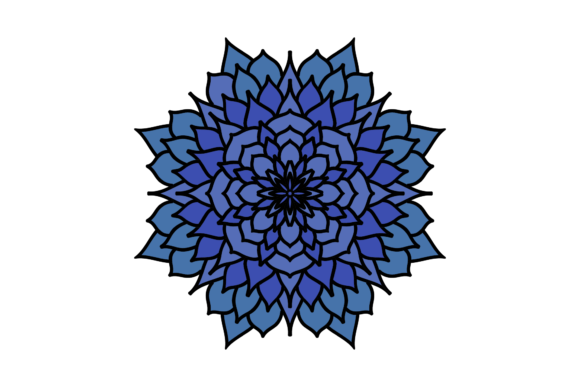
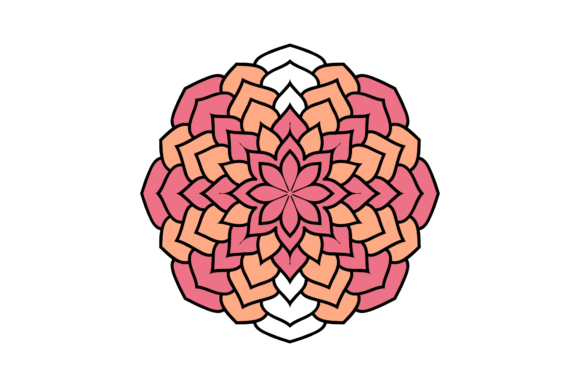
Mandala Patterns Element Cute refers to a curated digital design asset — specifically, a set of six high-resolution, scalable vector and raster files centered around playful, approachable mandala motifs. Unlike traditional or spiritually focused mandalas, this collection emphasizes soft lines, rounded forms, gentle symmetry, and a lighthearted aesthetic — making it especially suitable for modern craft projects, children’s products, wellness branding, or light-hearted stationery. It’s not a font, plugin, or subscription service; it’s a one-time digital download designed for immediate integration into creative workflows.
What Sets Mandala Patterns Element Cute Apart
The distinction lies in its intentional balance between structure and charm. While many mandala pattern sets prioritize intricate geometry or sacred symbolism, Mandala Patterns Element Cute leans into accessibility — both visually and technically. Each design is built on a 1920px × 1280px canvas, a practical size that accommodates screen-based previews without sacrificing print readiness at common small-to-medium scales (e.g., 5" × 7" greeting cards or 8" × 10" wall art). More importantly, the inclusion of six complementary file formats — AI, EPS, SVG, DXF, JPG, and PNG — reflects thoughtful format coverage rather than mere checklist compliance.
For example, the AI and EPS files preserve full vector editability in Adobe Illustrator, allowing users to adjust colors, isolate elements, or resize infinitely without quality loss. The SVG works natively in web design tools and cutting machines like Cricut Design Space, while the DXF ensures compatibility with laser cutters and CNC software commonly used in woodcraft or acrylic fabrication. The JPG and PNG provide quick-use options: JPG for flat-color backgrounds or mockups, PNG for layered compositions requiring transparency. This breadth supports diverse use cases without forcing users to convert or compromise.
How It Compares With Other Pattern Resources
When evaluating digital pattern assets, users often weigh three dimensions: flexibility, fidelity, and functional scope. Mandala Patterns Element Cute performs strongly on flexibility — thanks to its multi-format delivery — and fidelity — with crisp 1920px × 1280px resolution and clean vector paths. However, it differs meaningfully from broader alternatives:
- Subscription-based pattern libraries (e.g., Creative Market bundles or Envato Elements) offer hundreds of variations but require ongoing fees and may include inconsistent file quality or licensing restrictions for commercial resale. Mandala Patterns Element Cute is a one-time purchase with no recurring cost and clear personal/commercial use rights — ideal for users who need just a few reliable, well-structured motifs rather than volume.
- Free mandala SVGs found via search engines or design forums often lack editable layers, contain embedded raster elements, or use non-standard color modes (e.g., CMYK in RGB workflows), leading to unexpected output issues. In contrast, Mandala Patterns Element Cute delivers production-ready files with consistent color handling and layer organization.
- Custom-designed mandalas commissioned from freelance illustrators offer full uniqueness and brand alignment but carry higher cost, longer timelines, and less control over technical specifications unless explicitly negotiated. Mandala Patterns Element Cute provides a middle ground: professionally crafted, stylistically cohesive, and immediately deployable — without waiting or negotiation.
Strengths and Realistic Tradeoffs
One of its strongest advantages is workflow efficiency. Because all six files correspond precisely to the same visual composition, designers can switch formats mid-project without repositioning or scaling adjustments — a time-saver when iterating across platforms (e.g., testing an SVG on a website, then swapping to DXF for physical prototyping). The “cute” styling also reduces cognitive load during selection: softer curves and balanced negative space make these patterns easier to pair with friendly typography, pastel palettes, or illustrated branding — particularly in education, parenting, or self-care contexts.
That said, Mandala Patterns Element Cute isn’t optimized for every scenario. Its 1920px × 1280px base size, while versatile, isn’t ideal for large-format printing (e.g., murals or trade show backdrops) without upscaling — which may affect fine-line clarity in raster outputs. Similarly, the “cute” aesthetic limits applicability in formal, luxury, or minimalist design systems where sharp angles, monochrome schemes, or asymmetrical balance are preferred. Users seeking photorealistic textures, animated versions, or generative variations won’t find those here — nor should they expect them, as the product is intentionally focused and scoped.
When Mandala Patterns Element Cute Is the Right Fit
This resource shines when your priority is reliability over novelty. Consider it if you’re:
- Developing a small-batch product line — such as enamel pins, fabric patches, or printable planners — and need clean, scalable patterns that hold up across embroidery digitizing, vinyl cutting, or inkjet printing.
- Building a cohesive visual identity for a wellness blog, mindfulness app, or children’s activity kit and want recognizable yet gentle graphic motifs that reinforce tone without dominating content.
- Teaching design fundamentals and need classroom-ready examples demonstrating vector vs. raster use, layer management, or cross-platform file interoperability.
- Working under tight deadlines and prefer to avoid troubleshooting mismatched file types or inconsistent proportions across sources.
When You Might Choose Something Else
Mandala Patterns Element Cute may not be the best match if you require:
- Highly specialized output: For industrial textile printing (e.g., seamless repeats for fabric rolls), you’d likely need TIFFs with specific DPI settings and repeat tile configurations — not included here.
- Adaptable color systems: While editable in vector apps, the files don’t ship with pre-built Pantone swatches or accessible color contrast variants — something a branding team might need for regulatory compliance.
- Dynamic or interactive elements: There are no Lottie animations, CSS variables, or Figma auto-layout components — so it won’t support motion-based interfaces or design system tokens.
- Extensive variation: With only one core mandala motif delivered across six formats, it doesn’t offer stylistic alternatives (e.g., geometric, botanical, or watercolor-infused versions) within the same package.
Practical Integration Tips
To maximize value, start by opening the AI or EPS file in Illustrator to explore layer naming and grouping — many users overlook how much time this saves later when isolating petals or adjusting stroke weights. For crafters using Silhouette Studio or Sure Cuts A Lot, import the SVG first to verify cut lines before switching to DXF for more precise toolpath control. If you’re preparing for print, check the JPG’s embedded color profile (sRGB is standard for most online printers); for professional offset printing, you may need to convert the vector files to CMYK manually — a straightforward step in Illustrator’s Color Settings.
Finally, consider how Mandala Patterns Element Cute fits into your broader asset strategy. If you regularly source patterns, evaluate whether investing in a few highly compatible, well-documented sets — like this one — yields better long-term consistency than accumulating dozens of loosely related free downloads. Clarity of purpose, technical reliability, and ease of reuse often outweigh sheer quantity — especially when managing multiple projects or collaborating across disciplines.