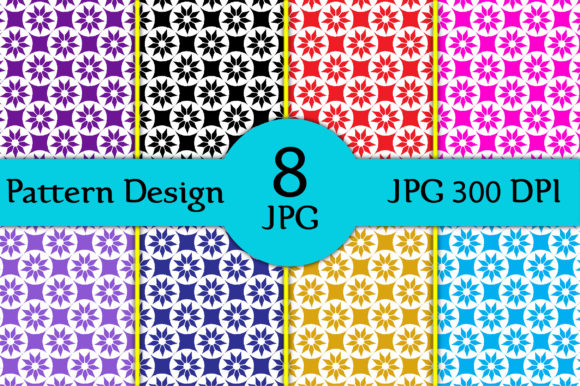
Mandala Patterns Beautiful Element: A Versatile Digital Design Resource for Creative Professionals
At the intersection of geometry, symbolism, and visual harmony lies the mandala—a timeless motif rooted in spiritual traditions across South Asia, Southeast Asia, and Indigenous cultures worldwide. Today, the mandala has evolved far beyond its ritual origins to become a foundational element in contemporary design practice. The Mandala Patterns Beautiful Element exemplifies this evolution: not merely an ornamental graphic, but a thoughtfully engineered digital asset built for adaptability, precision, and expressive potential.
Why Mandala-Based Design Resonates Across Disciplines
The enduring appeal of mandalas stems from their inherent structural intelligence. Radial symmetry, layered repetition, and balanced proportion create visual stability—qualities that translate powerfully into diverse applications. Designers use mandalas as focal points in branding; educators integrate them into mindfulness curricula; textile artists scale them for fabric repeats; and laser-cutting professionals rely on their clean vector integrity for precise physical fabrication.
What distinguishes the Mandala Patterns Beautiful Element is its intentional construction for cross-platform utility—not just aesthetic resonance. Unlike generic clipart or low-resolution stock graphics, this collection prioritizes technical fidelity without sacrificing artistic nuance. Each pattern is mathematically coherent, with smooth curves, consistent line weights, and scalable geometry that preserves clarity at any size.
Technical Composition: What Makes These Files Production-Ready?
The Mandala Patterns Beautiful Element delivers six distinct file formats—each serving a specific stage in the creative workflow:
- AI (Adobe Illustrator): Fully layered, editable vectors with named groups, ungrouped paths, and accessible swatches—ideal for designers refining color schemes or modifying individual motifs.
- EPS: Universally compatible vector format, widely accepted by print vendors and large-format plotters for high-fidelity output.
- SVG: Optimized for web integration—lightweight, responsive, and compatible with CSS animations, interactive dashboards, and modern CMS platforms like WordPress or Webflow.
- DXF: Precision-ready for CNC routers, laser engravers, and vinyl cutters—retaining exact path data, no rasterization, and zero tolerance for distortion.
- JPG: High-resolution (1920px × 1280px) raster preview—suitable for mood boards, client presentations, or social media visuals where transparency isn’t required.
- PNG: Same resolution with alpha transparency—enables seamless layering over photos, gradients, or textured backgrounds in both digital and print mockups.
This multi-format approach eliminates common bottlenecks: no more tracing low-res images, rebuilding vectors from scratch, or troubleshooting compatibility gaps between software ecosystems. Whether you’re preparing artwork for embroidery digitizing, generating SVG-based generative art scripts, or building a branded presentation deck, the Mandala Patterns Beautiful Element provides immediate, reliable starting points.
Creative Professionals & Brand Strategists
Brands seeking authenticity and visual distinction increasingly turn to symbolic geometry rather than clichéd icons. A mandala pattern can anchor a wellness brand’s visual language—not as decoration, but as a quiet signal of balance and intention. Designers have embedded the Mandala Patterns Beautiful Element into business card borders, app loading screens, and packaging foil stamping plates—leveraging its radial rhythm to guide the eye without overwhelming content.
Educators & Curriculum Developers
In classrooms, mandalas serve dual pedagogical functions: as tools for spatial reasoning (measuring angles, identifying rotational symmetry) and as frameworks for reflective practice (journaling prompts, collaborative drawing exercises). Teachers report using the PNG and SVG files to build interactive whiteboard activities—scaling elements dynamically during lessons on fractions or tessellation. Because the patterns are non-copyrighted and commercially licensed, they integrate safely into publicly shared educational resources.
Hobbyists & Makers
From woodburning artisans to resin jewelry creators, makers value precision and repeatability. The DXF and EPS files allow direct import into Glowforge, Cricut Design Space, or LightBurn—no manual cleanup needed. One ceramicist described using the AI file to isolate petal segments, then mirroring and rotating them to generate custom stencil templates for sgraffito work. Another quilter used the SVG to map repeating units onto fabric yardage via digital printing software—achieving perfect alignment across 48-inch-wide panels.
Researchers & Cultural Practitioners
While not ethnographic reproductions, these patterns honor mandalic principles—centered composition, nested layers, and directional flow—without appropriating sacred iconography. Researchers studying visual cognition have employed the JPG variants in controlled perception studies, noting how viewers consistently fixate first on the central node before scanning outward along symmetrical axes. This predictable gaze path makes the Mandala Patterns Beautiful Element valuable for UX testing of interface layouts or attention-mapping experiments.
Design Integrity Meets Practical Flexibility
A key strength of this collection lies in its restrained complexity. Unlike overly dense mandalas that lose legibility when scaled down—or oversimplified versions that feel generic—the Mandala Patterns Beautiful Element strikes a deliberate middle ground. Line thickness remains optically consistent across sizes; negative space is calibrated to prevent visual clutter at small dimensions; and anchor points are minimized to reduce rendering artifacts in animation or 3D extrusion workflows.
Consider a practical example: a marketing team designing a webinar landing page. They use the SVG file to embed a subtle animated mandala as a background element—rotating slowly at 0.5 rpm via CSS. When users scroll, JavaScript triggers a slight opacity shift tied to scroll depth, creating a sense of layered depth. Later, the same team exports the PNG at 50% opacity and overlays it on a hero image—using blending modes to unify disparate visual elements without losing brand cohesion. All of this is possible because the original file maintains editable structure and transparency support.
Workflow Integration Without Friction
Many digital assets require significant preprocessing before deployment—converting colors, expanding strokes, reorganizing layers. The Mandala Patterns Beautiful Element reduces those steps through intentional defaults:
- All vector files use CMYK and RGB-compatible swatches, with Pantone references included in the AI file’s color library.
- Stroke profiles are outlined where appropriate (e.g., in EPS/DXF), yet retain editable paths in AI/SVG for customization.
- No embedded fonts or external links—everything is self-contained, ensuring portability across machines and collaboration platforms.
- Canvas size (1920px × 1280px) aligns with common presentation and web banner standards, eliminating guesswork during layout.
This attention to production detail reflects an understanding that creativity thrives not in isolation, but within efficient systems. A freelance illustrator working under tight deadlines can drop the SVG into Figma, recolor three nodes using variables, and export assets for developer handoff—all in under seven minutes. A university lab technician can import the DXF directly into Mach3 software to route mandala-shaped ventilation grilles for a new biofeedback chamber. The consistency across formats means decisions made early in the process don’t cascade into costly revisions later.
Thoughtful Licensing for Ethical Use
The license accompanying the Mandala Patterns Beautiful Element permits both personal and commercial usage—including resale in derivative physical products (e.g., printed notebooks, embroidered patches, cast metal pendants) and digital goods (e.g., Canva templates, Procreate brushes, Notion dashboard themes). It explicitly prohibits redistribution of the source files as standalone digital assets—preserving the creator’s ability to maintain quality control and update formats as software evolves.
This balanced approach supports sustainability in creative economies: users gain flexibility to monetize their own adaptations, while the original designer retains stewardship over the core asset’s integrity. For educators developing open educational resources (OER), or nonprofits designing community outreach materials, this licensing clarity removes legal ambiguity—allowing focus to remain on impact rather than permissions.
Looking Ahead: Where Mandala-Inspired Design Is Headed
Emerging trends suggest growing demand for “meaningful minimalism”—designs that communicate depth without visual noise. As AR interfaces, ambient displays, and biophilic architecture gain traction, geometric motifs like mandalas offer scalable, culturally resonant frameworks for human-centered interaction. The Mandala Patterns Beautiful Element anticipates this shift: its clean vector foundation adapts effortlessly to generative AI workflows (prompting texture variations in Stable Diffusion), real-time 3D engines (importing SVG paths into Three.js), and even sonification projects (mapping radial segments to musical intervals).
Ultimately, what makes this collection distinctive isn’t just its technical completeness—it’s its respect for context. Whether used in a meditation app’s breathing guide, a city planner’s placemaking proposal, or a child’s STEAM activity sheet, the Mandala Patterns Beautiful Element functions not as a static image, but as a flexible visual language—one that invites interpretation, adaptation, and thoughtful application across disciplines and generations.