Black History Juneteenth Digital Papers
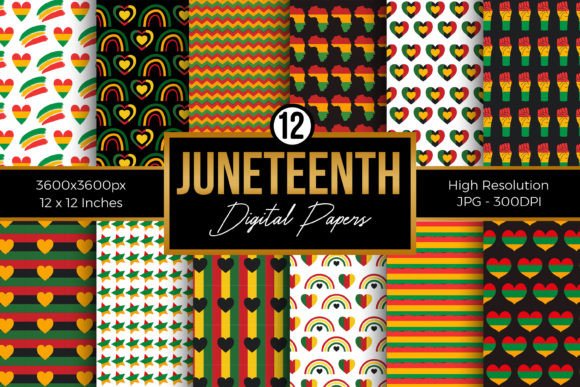
Black History Juneteenth Digital Papers are high-resolution, ready-to-use design assets built for intentionality—both in creative execution and cultural recognition. They’re not just decorative; they’re functional tools that support meaningful engagement with Black history, Juneteenth commemoration, and ongoing equity-centered practice. Designed at 300dpi and sized precisely at 3600 × 3600 pixels (12″ × 12″), each of the 12 included digital papers balances visual richness with technical reliability across physical and digital outputs.
These files integrate seamlessly into workflows where authenticity, consistency, and cultural resonance matter—whether you're preparing classroom materials before a lesson, finalizing an event invitation two weeks out, or building a branded product line for Juneteenth retail. Their value lies not only in aesthetics but in how they reduce friction between concept and delivery: no sourcing, no resizing, no color correction delays—just immediate usability rooted in thoughtful design.
How These Digital Papers Fit Into Real Workflows
For educators planning Black History Month units, these papers serve as foundational elements—not afterthoughts. You might use one as a background for printable discussion prompts, another as a layered texture behind student-facing slide decks, or a third embedded directly into a digital planner template shared with learners. Because all 12 files are JPG-based and uniformly sized, they drop into Canva, Adobe Express, or Google Slides without scaling distortion or export surprises.
Small business owners and makers often face tight turnaround windows when launching seasonal products. With Black History Juneteenth Digital Papers, you can wrap acrylic tumblers, print greeting cards, or design limited-edition stickers—all from the same asset set. That consistency matters: it builds brand cohesion while honoring the significance of the themes represented. No need to juggle multiple resolutions or formats. One zip file, one standard size, twelve distinct patterns—each carrying its own narrative weight through African-inspired motifs, symbolic geometry, and intentional color palettes.
Freelancers and content creators use these papers to accelerate client deliverables. A social media manager prepping a Juneteenth campaign can apply one pattern as a story background, another as a downloadable resource header, and a third as part of a printable gratitude journal for followers. The uniform resolution means no last-minute pixelation checks before posting. The cultural grounding means less time explaining context—and more time executing with clarity.
Practical Integration Across Platforms and Outputs
Compatibility starts with format simplicity. JPG files work natively in virtually every design tool, printing service, and web platform. Unlike layered PSDs or vector-based SVGs that require editing software or conversion steps, these papers are “open-and-go.” That makes them especially useful in collaborative environments—think school districts using shared Google Drive folders, marketing teams working across Figma and PowerPoint, or craft collectives coordinating via Discord and Etsy listings.
For physical production, the 12″ × 12″ dimension aligns directly with common craft supply standards: scrapbook paper pads, sticker sheets, and gift wrap rolls. If you’re wrapping a tumbler, the square format allows clean seam alignment with minimal trimming. For wall art, the 300dpi resolution ensures crisp detail even when printed at 16″ × 16″ or larger—no interpolation artifacts, no soft edges.
When used in digital planners or Notion templates, these papers add tactile warmth without compromising functionality. They don’t interfere with hyperlinked tabs or embedded calendars—they enhance them. And because each pattern is distinct yet harmonized in tone and saturation, switching between them maintains visual rhythm across weekly spreads or monthly dashboards.
Preparation and Organization Tips
Before diving into a project, spend five minutes organizing your files. Unzip the folder and rename each JPG meaningfully—e.g., Juneteenth_Geometric_Blue, African_Kente_RedGold. This small step pays off when scanning dozens of assets mid-deadline. Consider creating subfolders by use case: /Printables, /Digital_Planners, /Social_Media. It takes under a minute and eliminates scrolling fatigue later.
If you're integrating these into recurring workflows—like monthly newsletter headers or quarterly educator resource kits—add them to your design system library. In Figma or Adobe XD, create a “Juneteenth Assets” page with thumbnails and usage notes. In Canva, upload them once to your Brand Kit so they appear alongside your logo and fonts. Consistency isn’t accidental; it’s built through deliberate setup.
For quality control, test-print one paper at home before bulk ordering. Check contrast, color fidelity, and edge sharpness on your intended paper stock. Some printers render deep indigos or burnt oranges differently than screens—this step catches variances early. Likewise, preview digital uses on both light and dark mode interfaces to ensure legibility of overlaid text.
Long-Term Use and Cultural Alignment
These digital papers aren’t limited to February or June. They’re adaptable year-round—for heritage celebrations, community workshops, DEIB training handouts, or even personal reflection journals. Their strength lies in versatility grounded in respect: each pattern draws from African textile traditions, Adinkra symbols, or Afrofuturist abstraction—not as trend-driven motifs, but as anchors to deeper narratives.
That intentionality supports long-term use. You won’t outgrow them after one holiday cycle. Instead, they become part of your toolkit—like a well-curated font library or a trusted photo archive. Reuse them across contexts, reinterpret them with overlays or cropping, layer them with photos or illustrations—but always retain their original resolution and integrity. Avoid excessive compression when re-saving; keep master copies untouched.
For teams, consider pairing these papers with brief context documents—two-paragraph notes on the origin of a specific pattern, its regional roots, or its symbolic meaning. Share those alongside the files. It transforms passive use into active learning, especially valuable for educators, nonprofit communicators, and corporate L&D designers.
Where These Papers Interact With Other Tools and Decisions
They complement—not replace—other resources. Pair them with verified historical timelines when designing classroom posters. Layer them beneath editable text boxes in Canva when building invitations. Use them as base textures before applying duotone filters in Photoshop for custom variations. They coexist with accessibility checkers (like WAVE or axe) to ensure contrast meets WCAG standards when adding text.
Your choice to use Black History Juneteenth Digital Papers also informs procurement decisions. If you’re sourcing physical products—like notebooks or mugs—you’ll know exactly which pattern translates best to foil stamping or ceramic transfer. That specificity reduces revision rounds and improves vendor communication.
Finally, they support decision-making around timing. Because everything is pre-sized and high-res, you can finalize a Juneteenth campaign layout three days before launch—not three weeks. That agility creates space for feedback, iteration, and thoughtful refinement instead of rushed execution.
Implementation That Scales With Your Goals
Whether you're producing one handmade card or managing a national brand rollout, Black History Juneteenth Digital Papers scale cleanly. Start small: print one pattern on cardstock for a thank-you note to a mentor. Then expand: build a full suite of planner inserts, embed them in email templates, or license them for internal team use in shared design systems.
The key is matching the paper to the outcome—not the other way around. Choose based on function first: does this need high contrast for readability? Does it need subtle texture to avoid competing with photography? Is it going on a dark background or a light one? Let the workflow guide the selection—not just preference.
And remember: using these papers well isn’t about perfection. It’s about showing up with preparation, respect, and practicality. When your digital assets reflect both cultural depth and technical readiness, your work communicates more clearly—and resonates more deeply.